With the popularity of smartphones, portable devices, and wearable devices, narrow pitch board to board connectors will be increasingly used in electronic product manufacturing. For consumers, constantly pursuing the next generation of cool product experiences and owning thinner portable products is a sign of keeping up with the trend. However, for electronic product manufacturers, ensuring the reliability of internal connections in ultra-thin electronic products is indeed a huge challenge. This article focuses on the technical characteristics of narrow pitch board to board connectors and the latest products of TE board to board connectors.
1、 B connector structure
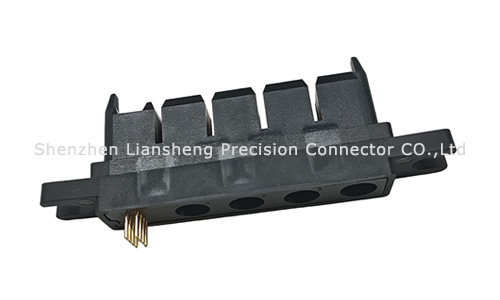
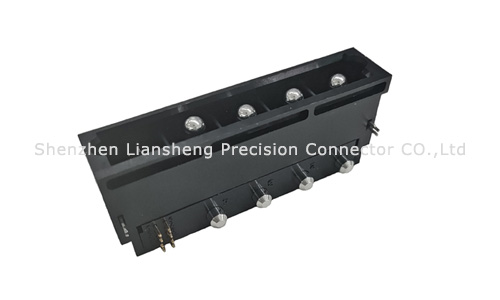
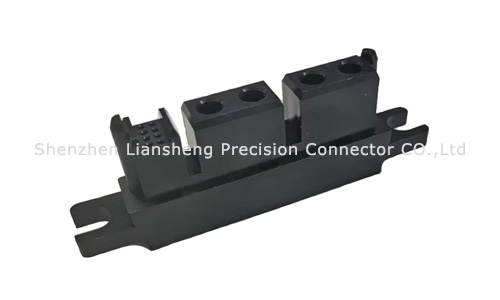
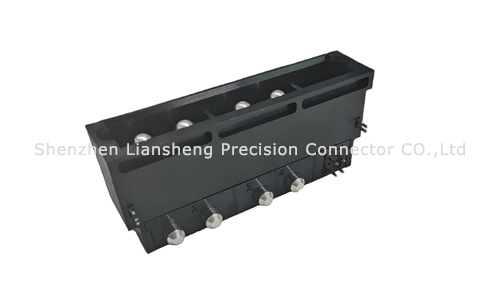
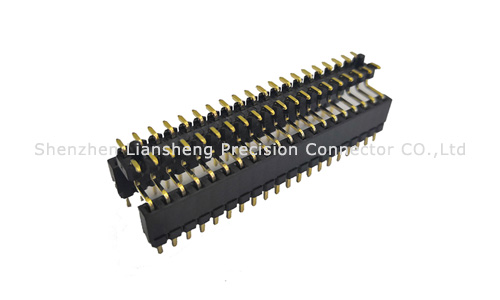
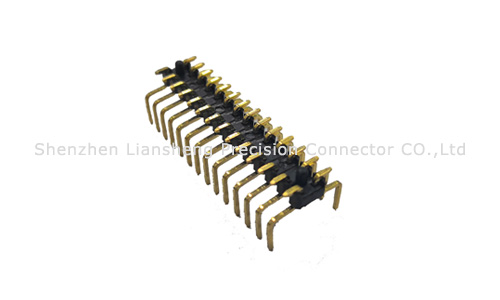
The B connector is used to connect two PCBs or PCBs and FPCs, and the characteristic of achieving electromechanical connection is the mating of male and female connectors. Therefore, there are strict mating requirements for the plastic body and terminals of the connector. As shown in the figure below, it is a pair of B connectors.
2、 Technical characteristics of B connector
Firstly, it is flexible in connection, easy to install, and easy to disassemble.
Today's board to board height is ultra-low to reduce the thickness of the aircraft. At present, the world's shortest board to board connector combination height is 0.6mm. This minimizes product thickness to achieve the purpose of connection, which has led to the increasing number of ultra-thin mobile phones on the market.
3. The contact structure has super strong environmental resistance, not only soft, but also adopts a strong connection with high contact reliability. In order to improve the combination force of the socket and plug, a simple locking mechanism is used in the fixed metal parts and contact parts to increase the combination force and make the lock more insertable. Meanwhile, some manufacturers offer dual contact structures to improve contact reliability.
4. The pin spacing is getting narrower and narrower. At present, mobile phones mainly use 0.4mm pitch, mainly developed by Panasonic, JAE and other manufacturers. 0.35mm pitch is probably the narrowest board to board connector in the industry so far. 0.35mm pitch is currently mainly used for Apple phones and high-end domestic models. Its application will be a major trend in the next two years. It has the advantages of the smallest volume, the highest precision, and high performance, but it requires high requirements for surface mount and other supporting processes. This is the most important aspect that many connector manufacturers need to overcome, otherwise the yield rate will be very low.
5. In order to meet the requirements of the T process, the terminal welding area of the entire product strictly requires good coplanarity. The industry standard is usually 0.10mm (* * x), otherwise it will cause poor soldering with the PCB and affect the use of the product.
6. New requirements have been put forward for the electroplating process of ultra narrow board to board connectors, with a combined height of 0.6mm and a single product less than 0.4mm. In terms of high products, how to ensure that the gold plating thickness and tin effect of the product do not climb the tin has become the most critical issue for connector miniaturization. At present, the general practice in this industry is to block the tin path by laser peeling off the gold plating layer, thereby solving the problem of non tin crawling. However, one drawback of this technology is that the laser can also damage the nickel plating layer, resulting in copper exposure to air and corrosion and rusting. At present, Japanese company Panasonic Electric has successfully solved this problem by electroplating a nickel exposed area of less than 0.08mm at the root of the terminal pins. Currently, only a few international technologies can achieve nickel exposed areas.
7. It must be mentioned now that board to board connectors can be designed with simple machine circuit structures. The miniaturization of the connector bottom without contacting the PCB board is quite beneficial by setting insulation wall PCB board wiring and metal terminals at the bottom of the connector.
Compared to the board to board connectors from three years ago, the current connectors are half or even smaller. Therefore, during the assembly process, it is necessary to align the inlet angle and then press it down with force to avoid product damage caused by misalignment. For ultra-thin and ultra narrow board to board connectors, on-site employees should receive training before starting work to improve production efficiency. Generally, mainstream board to board connector manufacturers will provide assembly process guidance in the specifications of Panasonic, Hirose, and Japan Airlines.
3、 Introduction to the latest solutions for TE board to board connectors
The following video shows TE's latest launch of three B connectors to meet the reliability needs of smartphone manufacturers for ultra-thin and ultra small B solutions:
1. 0.4mm fine pitch EMI shielding board for FPC connector: This connector includes a socket connector FPC and a reinforcement board, but its height is only 9mm. Compared to traditional FPC, this connector adopts unique spring contacts and self-locking protection, reducing its height and width. The unique lock protection function not only helps customers reduce the overall appearance height of the device, simplify the reliability process, but also reduces electromagnetic interference.
2. 0.4mm spacing board to board connector: The main structure is sturdy and can effectively reduce the occurrence of breakage;
3. Another 0.35mm spacing board to board connector: adopting a locking and fixing bolt design, the connector has stronger holding force, and the uniquely shaped locking and fixing bolts further improve the robustness of the connector structure.





 WeChat Scan
 WeChat Scan