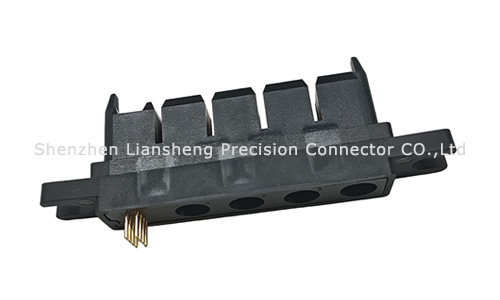
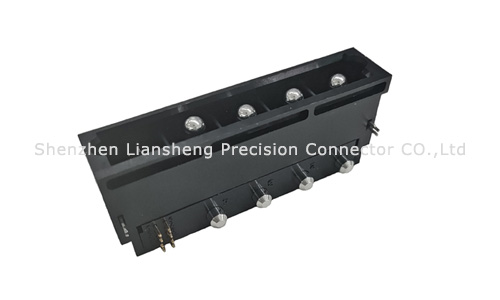
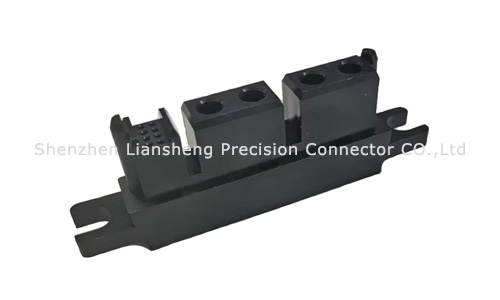
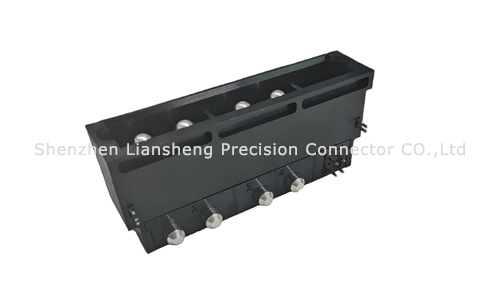
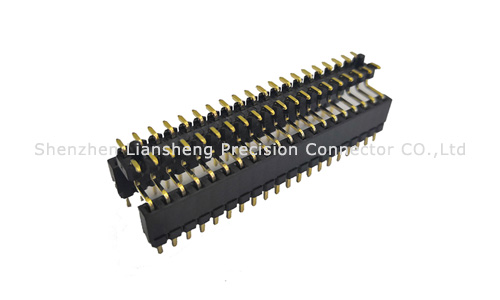
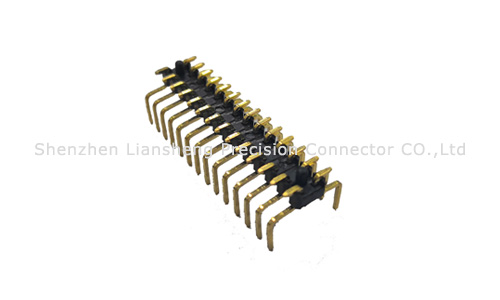
The application of FPC connectors is becoming increasingly widespread. From. 54mm to 0.3mm, it can be said that the development is very fast, and the performance technology of different specifications is also different. Therefore, it is normal for everyone to not understand the connector performance technology and other knowledge of FPC. The following is Liansheng's analysis of FPC connector performance technology.
FPC connectors have high density, small size, and light weight. The thickness of the FPC connector is 1.0mm, with a depth of 3.2mm, and there is a terminal spacing of 0.6mm on the soldered terminals. FPC connectors are generally used for devices such as LCD displays, scanners, telecom cards, storage devices, portable hard drive speakers, digital cameras, cameras, car audio systems, televisions, typewriters, computers, cash registers, telephones, etc.
From the perspective of electronic market applications, currently FPC connectors are mainly produced with a 0.5mm pitch, and 0.3mm pitch products have also been widely used. On the one hand, in the electronic product market, products are often very small. On the other hand, a large number of functional modules are constantly integrated into the system, requiring the transmission of more and more signals, which requires more pins and FPC connectors with more contacts, even smaller spacing, and smaller shapes. Products that achieve high-density integration goals tend to be miniaturized.
FPC, represented by smartphones, is rapidly developing towards miniaturization in electronic device connectors and is one of the main connections for using flexible circuits to connect circuit boards in consumer electronic devices. In the automotive market, FFC/FPC radios are widely used in wireless appliances, GPS devices, LCD displays, and entertainment equipment. In terms of medical equipment, FFC/FPC connectors can help achieve the miniaturization required for handheld devices, including monitoring devices, and their applications are becoming increasingly common.
FPC connectors are stable and reliable. Whether it is plastic mold flow, terminal performance, forward force, or the most important performance indicators of the connector, FPC needs to be designed. Before mass production of products, designers should use various software to conduct detailed and comprehensive analysis to determine its strength and structure, in order to ensure the quality of the connector and the reliability of the design. Secondly, in the manufacturing process of FPC connectors, due to the use of semi-automatic or even fully automatic assembly, testing, and packaging processes, manual operations are reduced, and potential quality or other issues are greatly reduced.
The main advantage of FPC connectors is the ability to effectively utilize existing space. In addition to cost savings, the space in the upper and outer shells of PCBs also promotes compact and highly mobile designs, making them widely used in many electronic device segments. Another advantage of FPC connectors is that they can provide connections for moving and movable parts. For example, the display screen of a digital camera can be pulled out or flexibly adjusted in position, while still maintaining electrical connection with the camera body; Or the connection between the flip cover, slide cover laptop or mobile phone display and the body.





 WeChat Scan
 WeChat Scan